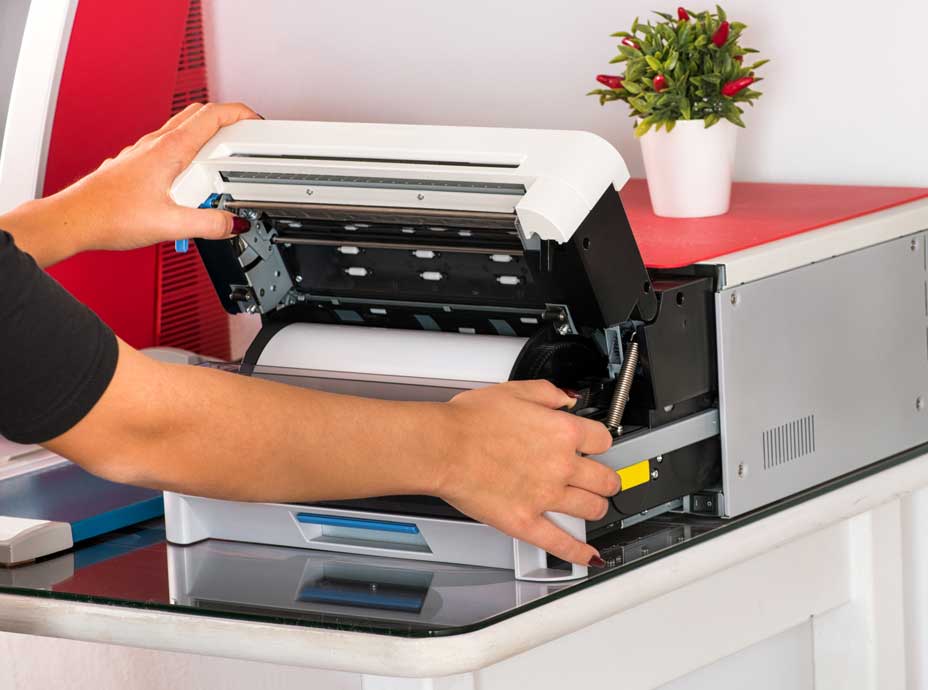
Foil fusing is a post-printing process that involves adding a metallic or holographic foil layer to printed materials to enhance their visual appeal. This technique is widely used in the printing and finishing industry to add a touch of sophistication to various printed items, such as business cards, invitations, packaging, and promotional materials.
While foil fusing can add a visually appealing and luxurious element to printed items, it's essential to consider factors like cost and the specific design requirements of your project before deciding to incorporate this technique. Foil fusing is a post-printing process, so it's often used in combination with other printing methods to achieve the desired result.

There are several reasons to use foil fusing. Firstly, it can add an elegant and sophisticated touch to printed materials. The shiny, reflective surface of the foil creates a visually striking effect that can make designs and text stand out.

Foil fusing comes in various finishes, including metallic, matte, holographic, and even specialty finishes. This allows for creative customization to suit different design preferences.

Foil fusing can be applied to a wide range of materials, including paper, cardstock, and certain plastics. This makes it versatile for various applications, such as business cards, invitations, packaging, and promotional materials.

Foil fusing can be used to highlight specific elements of a design, such as logos or brand names. This can contribute to brand recognition and make printed materials more memorable.

The addition of foil is often associated with luxury and high-end products. Using foil fusing can convey a sense of quality and exclusivity to your printed materials.




While there are numerous advantages to integrating 3D printing into the educational system, it's essential to consider budget constraints, teacher training, and safety protocols. Additionally, educators should ensure that 3D printing aligns with educational goals and curriculum standards.
Overall, 3D printing has the potential to revolutionize education by making learning more engaging, interactive, and practical, ultimately preparing students for the challenges of the 21st century.
We can provide following services:
Provide guidance and professional information, combined with demonstrations and hands on workshops.
Our services are not only limited to schools. Barangays and private organizations can benefit from our expertise.
When you want to start your 3D printing experience NERDS.PH can give you valuable advice choosing the printer that will suit your needs and expectations. We work together with renowned companies and will provide you with the best price and service.
While foil fusing can add a visually appealing and luxurious element to printed items, it's essential to consider factors like cost and the specific design requirements of your project before deciding to incorporate this technique. Foil fusing is a post-printing process, so it's often used in combination with other printing methods to achieve the desired result.
Of course, it will reduce the costs of your project.
Do note that designs (files) needs to be of high quality to be able to be printed. Sometimes some image manipulation will be necessary.
We use Foil Fusing as supporting technology for our 3D printing and laser cutting business, but we are open to personal and/or batch production.
The first step in Foil Fusing is the creation of a digital design or image using specialized software. A foil sheet, usually made of metallic or holographic material, is placed over the printed design.
The foil-covered print is then passed through a machine that applies heat and pressure. The heat activates the adhesive in the toner, causing the foil to adhere to the printed areas.
After the foiling process, the material is allowed to cool, and the excess foil is removed, leaving behind the foil only in the desired printed areas.